

Completion of the Capitalist Helmsman, Forging the Rational Toolkit
Through our previous journey, we have forged the complete gear of a helmsman capable of navigating the rough seas of capitalism. We learned how to convert “addition of time,” the most equitable resource in the world, into exponential compounding. We equipped ourselves with the flexibility of “frequent thinking” and “Bayesian inference” to prevent cognitive analysis paralysis.
Furthermore, we acquired mechanical “position sizing” as proven by “Shannon’s Demon,” mathematical designs via the “Financial Kelly Criterion,” and the tranquility of “Amor Fati” and “dead investors” who fully accept and cherish both past and present. Now, our brains possess a powerful, rational toolbox that remains unshaken by greed and fear. It is time to apply these tools to daily life and reflect upon them to uncover the true essence of objects and situations.
The Core of Stoic Philosophy: Neutrality of Things and Mastering ‘Meaning’
The Stoic philosopher Epictetus proclaimed, “Men are disturbed not by things, but by the principles and notions which they form concerning things.” External environments or physical objects are completely neutral. Amateurs who become slaves to their wallets—subjugated by artificial numbers on price tags—are swayed by cost, stimulating the amygdala and secreting cortisol (the stress hormone). Conversely, true masters of capital anchor a clear, self-defined “Meaning” directly into objects and consumption.
The meal I bought for someone yesterday was not a mere expense. It was an active investment and a form of “psychological hedging” that reduced relational friction, guarded my brain’s equilibrium, and maximized risk management capabilities.
Attributing new philosophical meaning to unavoidable expenditures or past events is not simple rationalization. It is a high-level cognitive control strategy that suppresses the fear response of the amygdala and activates the prefrontal cortex responsible for rational judgment. Only when cerebral stress is controlled can we overcome fatal psychological overfitting in real-world investing and respond with absolute composure.
Dissecting Everyday Consumption: Rockefeller’s Ledger and Mathematical Alchemy
John D. Rockefeller’s “Ledger A”—a titan of capitalism—was no ordinary record of frugality; it was a philosophical resolution endowing even a single cent’s flow with absolute purpose. The everyday consumer items we encounter possess multiplicative value, much like the mathematical “Benford’s Law.” However, mindless spending increases the entropy (disorder) of an account, paving the path to ruin.
True capitalists control daily spending through the principle of “Shannon’s Demon.” Actively selecting and managing expenses on food, coffee, or instant meals is a process that regulates cash flow and generates “rebalancing alpha.” Rather than holding today hostage to the 10-billion-won future fantasy, an asset allocation system is finalized when daily spending is governed within the boundaries of one’s philosophical limits (the Kelly Criterion). Only those who master the meaning of everyday life can capture capital’s monumental “Timing.”
The True Masters Heading Out to the Streets
Confining oneself to a dark room, staring at red and blue chart screens while being swept away by daily surges of dopamine and adrenaline, belongs to the realm of amateurs. True masters of capitalism step out into the real world beyond the charts—onto the streets of daily life. They sprinkle philosophical and mathematical sauces over real-world phenomena, cooking them with their personalized toolboxes.
On a weekend morning, I opened my eyes and confronted a pure law of nature: “I don’t want to go outside.” The moment I forced myself to get dressed and step out the door, my brain would inevitably suffer stress, shattering the peacefulness of the weekend.
I craved coffee. Opening the delivery app to select my order, the total fell short of the minimum order threshold, forcing me to add a toast.
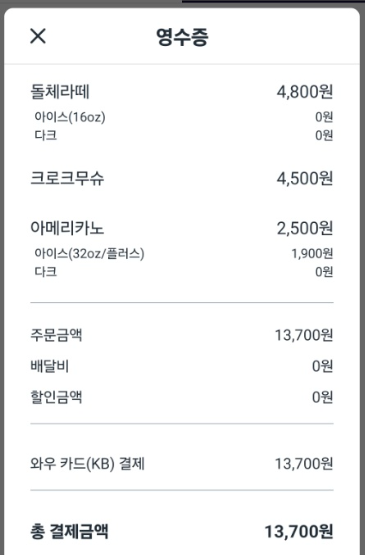
“I thought to defend my delivery fee, therefore I am!”
“Receipt: A cup of coffee and a toast for about $10 to defend my weekend peace.”
Yet at that very moment, a philosophical twist occurred. The cost of this toast was not a simple expense. It was a “strategic leverage” designed to convert my time and energy into compound returns!
This toast was a geometric inevitability birthed by platform capitalism, and a flawless economic decision that preserved my weekend’s state of equilibrium. Since I had to eat something anyway, I decided to complete a “perfect day” by enjoying this toast, staying cozy under the covers, and reading a book.
And indeed, that weekend became a “perfect day” spent resting and reading.
What does all this mean? Had I walked outside to buy coffee myself, would I have truly saved the cost of that toast? There is no way to know. By infusing explicit philosophical meaning into a cup of coffee that otherwise would have been consumed mindlessly, the toast had already paid for itself in full.
Discerning the essence of daily occurrences and assigning them “Meaning” is far more valuable than any financial product.
Through the delivery app’s minimum order amount, did we not once again clearly realize how the machinery of capitalism operates on low margins, high volumes, and microscopic fee structures? Seeing a toast forcefully bundled with coffee to cover the delivery threshold revealed the essence of real-world finance: even the local coffee shop is operating on an ETF (bundled asset) model.
I even realized that to prevent cognitive energy expenditure (analysis paralysis), I should establish a system trading rule: mechanically ordering the “coffee + toast” set without even looking at the menu. Yet, a counterargument immediately surfaced: ‘If I don’t scan the menu, wouldn’t I suffer a severe information loss by missing out on the market’s new menu items—a potential source of new alpha?’ Such intense deliberations flickered through my mind.
Accumulating these definitions and insights to discover the true meaning of the world we live in within our own time—that is the most magnificent and superior form of investment.
The way you define your daily life ultimately defines your investments.
Moving forward, we will meticulously dissect every everyday phenomenon using the “Philosopher’s Toolbox”—from the economics of morning coffee and the psychological overfitting of luxury car ownership, to the thermodynamic equilibrium of instant foods and the Kelly Criterion hidden within spending and relationships. Are you ready to become a true helmsman of capital?
“The stage is set. Now it is your turn to actively roll Stoic thinking in your daily life through frequent reflection. Will you remain a slave to your wallet, swayed by the price of things, or will you become a true philosophical human who masters the meaning of everyday life? Choose and execute.”

💡 Read Deeper with the Philosopher's Eye
- 0. Capital Philosopher: A Philosophical Journey to Master Capital
- 1. How to Survive Unequal Capitalism: The Secret of Time You Didn’t Know
- 2. How to Survive the Ever-Changing Stock Market: Simple Truth and Frequent Thought
- 3. Give Meaning to Capital: Pierce the ‘Essence’ and Become the Master of Money
- 4. Why Philosophy Beats Trading Techniques in Capitalism